
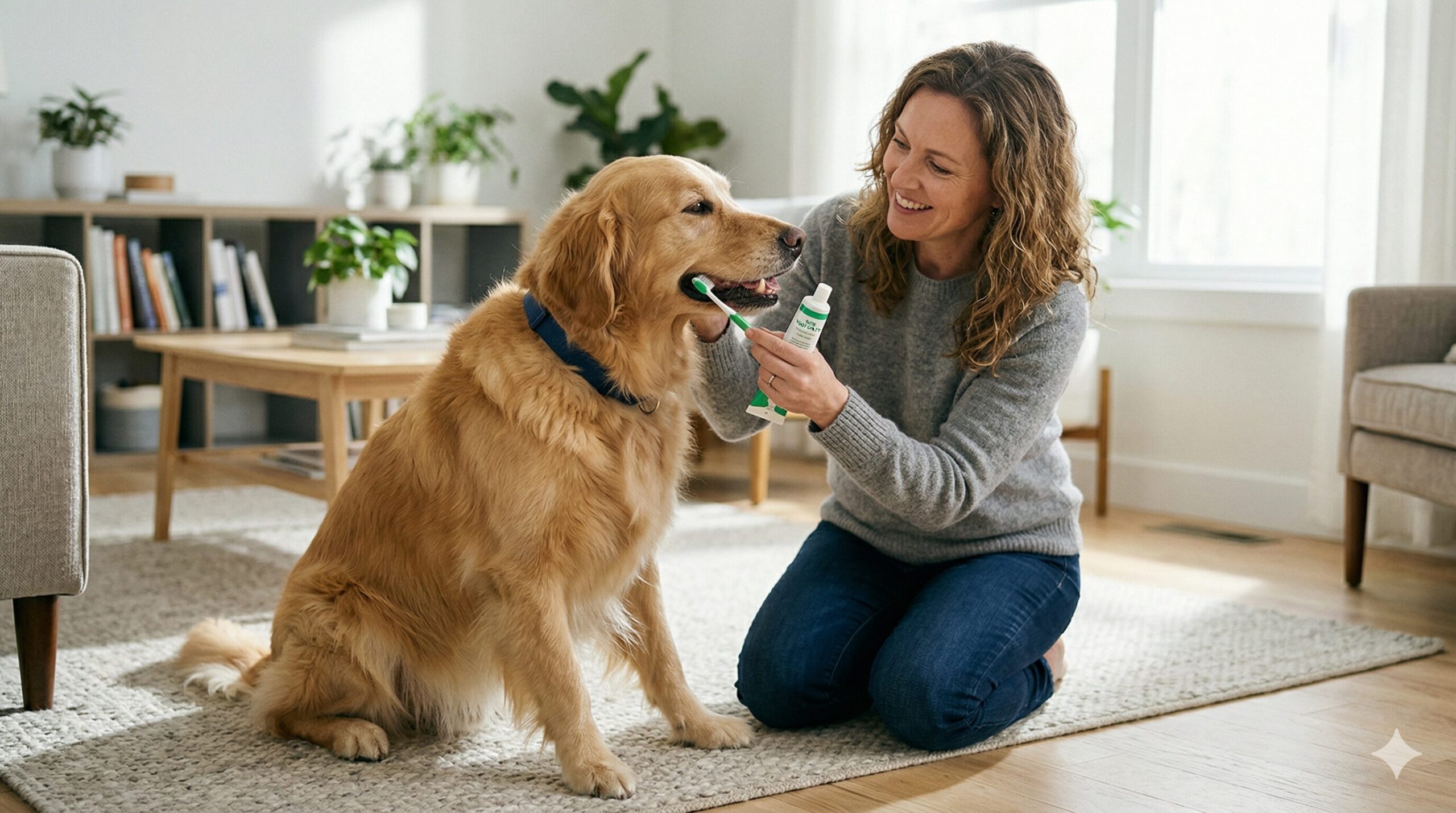
Every dog owner should have a dog dental care guide bookmarked — because dental disease is the most common health problem in adult dogs, affecting roughly 80% of dogs over age 3 according to the American Veterinary Dental College. Yet most owners don’t brush their dog’s teeth at all. This dog dental care guide covers everything you need: step-by-step brushing, alternatives for resistant dogs, warning signs of disease, and what professional cleanings actually cost.
Why Every Dog Needs a Dog Dental Care Guide
Dental disease in dogs begins with plaque — a soft bacterial film that forms on teeth within hours of eating. Left unremoved, plaque mineralizes into tartar (calculus) within 3–5 days. Once tartar forms, brushing can no longer remove it — only professional cleaning under anesthesia can. Over time, bacteria beneath the gum line cause gingivitis, then periodontitis, destroying the bone and tissue that anchor teeth.
Dogs in pain from dental disease typically continue eating because hunger overrides discomfort. By the time owners notice something’s wrong, significant damage is already done.
The financial side also matters: a professional dental cleaning under anesthesia typically costs $300–$800. Extractions add $50–$150 or more per tooth. This dog dental care guide is your path to avoiding most of those costs.
Dog Dental Care Guide: Step-by-Step Brushing
Brushing is the gold standard. Done consistently — at least 3–4 times per week, daily if possible — it removes plaque before it hardens into tartar and significantly slows periodontal disease.
What you’ll need:
– A dog-specific toothbrush or finger brush (never a human toothbrush, too hard)
– Enzymatic dog toothpaste (never human toothpaste — xylitol and fluoride are toxic to dogs)
The Virbac CET Enzymatic Toothpaste [Amazon] ($8–$12) is the veterinarian-recommended go-to, available in poultry, vanilla-mint, and seafood flavors. Enzymatic formulas break down plaque on contact — even without scrubbing. The Vet’s Best Triple-Headed Toothbrush [Amazon] ($8–$10) makes reaching back teeth easier with its angled three-sided design.
Step 1: Build positive associations
Before introducing brushing, spend several days letting your dog lick toothpaste off your finger. Make it something they want — pair with praise and small treats.
Step 2: Introduce the brush
Let your dog sniff and lick the brush with paste on it. No brushing yet — just positive contact.
Step 3: Lip and gum contact
Gently lift the lip and make brief contact with the gums and outer tooth surfaces. Keep sessions under 30 seconds. Reward generously.
Step 4: Begin brushing
Use short circular motions on the outer surfaces of the teeth, focusing on upper back molars and canines — the highest tartar accumulation spots. Aim for 30–60 seconds per session.
You don’t need to brush the inner (tongue-side) surfaces in most cases — the tongue naturally cleans those surfaces.
Step 5: Build consistency
Consistency beats perfection in any dog dental care guide. Brushing 3–4 times weekly significantly outperforms sporadic attempts. Keep sessions short and positive.
When Your Dog Won’t Accept Brushing
Some dogs — especially adults introduced to brushing late — won’t tolerate a toothbrush. Don’t force it. Instead, layer these alternatives:
VOHC-approved dental chews: The Veterinary Oral Health Council (VOHC) seal means a product has been independently tested and proven to reduce plaque or tartar. Greenies are the most widely available VOHC-accepted option. The Greenies Original Dental Chews [Amazon] ($25–$35 for a large bag) are genuinely effective when given daily.
Water additives: Products like TropiClean Fresh Breath Water Additive [Amazon] ($10–$15) are added to your dog’s water daily and help break down plaque. Less effective than brushing or dental chews, but effortless and complementary.
Raw bones (with caution): Raw recreational bones provide mechanical plaque removal. Large raw marrow bones and knucklebones work well — but never cooked bones (they splinter), small bones, or weight-bearing bones from large animals (risk of cracking teeth). Always supervise.
Dental-specific diets: Hill’s Prescription Diet Dental Health (td) is VOHC-accepted and uses a fiber matrix that mechanically cleans tooth surfaces as dogs chew. Requires a prescription.
Warning Signs That Require a Vet Visit
This section of any dog dental care guide could save your dog real pain. Watch for:
- Foul breath that goes beyond normal doggy breath — a sign of bacterial overgrowth and active infection
- Yellow or brown buildup at the gum line — tartar already present; professional cleaning needed
- Red, swollen, or bleeding gums — gingivitis is active
- Loose or missing teeth — advanced periodontal destruction
- Difficulty chewing, dropping food, or chewing on one side — possible tooth pain
- Pawing at the mouth or rubbing face on furniture — discomfort signal
- Swelling below the eye — can indicate a tooth root abscess, a dental emergency
Professional Dental Cleanings
No matter how diligent your home routine, most dogs benefit from periodic professional cleanings. Your veterinarian will recommend frequency based on your dog’s individual rate of tartar buildup — typically every 1–3 years for dogs with good home care; annually or more often for small breeds, brachycephalic breeds, and Greyhounds.
What happens: Your dog is placed under general anesthesia. This allows thorough below-gum-line cleaning, dental X-rays to identify bone loss and hidden problems, and probing each tooth for pocketing. All of this is impossible on an awake dog.
Cost: Expect $300–$800 for a routine cleaning without extractions. Dental radiographs add $100–$200. Extractions add $50–$150+ per tooth.
On anesthesia concerns: Modern veterinary anesthesia is safe. Pre-anesthetic bloodwork is standard practice, screening for underlying organ problems. The risks of untreated dental disease — chronic pain, systemic infection, organ damage — consistently outweigh anesthesia risk in healthy adult dogs.
A note from this dog dental care guide: “anesthesia-free” dental cleanings offered at pet stores are not recommended by veterinary dental specialists. They can remove visible tartar from surfaces but cannot clean below the gum line, take radiographs, or address the underlying disease process.
Dog Dental Care Guide: Breed-Specific Considerations
Small breeds (Chihuahuas, Yorkies, Dachshunds, French Bulldogs) develop dental disease faster and more severely than large breeds due to tooth crowding. Small breed dogs often need professional cleanings annually from age 2–3. Brachycephalic breeds with compressed jaws have even more crowding and need aggressive dental care from puppyhood.
Large and giant breeds are relatively more resistant but still benefit from consistent home care and periodic professional attention.
The information on Real Dog Answers is for educational purposes only and does not replace professional veterinary advice. Always consult your veterinarian before making changes to your dog’s diet, exercise, or health routine.
For more on keeping your dog healthy overall, see our best joint supplements for dogs and our golden retriever care guide.
Frequently Asked Questions: Dog Dental Care Guide
How often should I brush my dog’s teeth?
Daily is ideal; 3–4 times per week provides meaningful protection. The key message of any dog dental care guide is that consistency matters more than perfection — even twice-weekly brushing significantly reduces plaque and tartar compared to no brushing.
What toothpaste should I use for my dog?
Always use dog-specific toothpaste. Human toothpaste contains xylitol (highly toxic to dogs) and fluoride. Dog toothpastes are enzymatic, safe to swallow, and come in flavors dogs find appealing — poultry, beef, and vanilla-mint are popular.
Are dental chews actually effective?
VOHC-accepted dental chews (like Greenies) have demonstrated clinical efficacy in independent studies. They work through the mechanical abrasion of chewing combined with anti-plaque agents. Not as effective as brushing but a meaningful addition, especially for dogs who won’t tolerate a toothbrush.
How do I know if my dog needs a professional dental cleaning?
The clearest signs are visible tartar, persistent bad breath, and red or bleeding gums. Your vet should evaluate your dog’s teeth at every annual exam. Many vets use a dental grading scale from 0 (healthy) to 4 (severe disease) to guide cleaning recommendations.
Is anesthesia-free dental cleaning a good option?
Most veterinary dental specialists do not recommend it. While it removes visible surface tartar, it cannot clean below the gum line, take radiographs, or probe for pocketing — leaving the most clinically significant disease unaddressed.
When should I start brushing my dog’s teeth?
Start as young as possible — ideally during the puppy socialization window (8–16 weeks). Building tolerance for brushing early makes it dramatically easier once adult teeth come in around 6 months. Adult teeth are the ones that matter for long-term health.