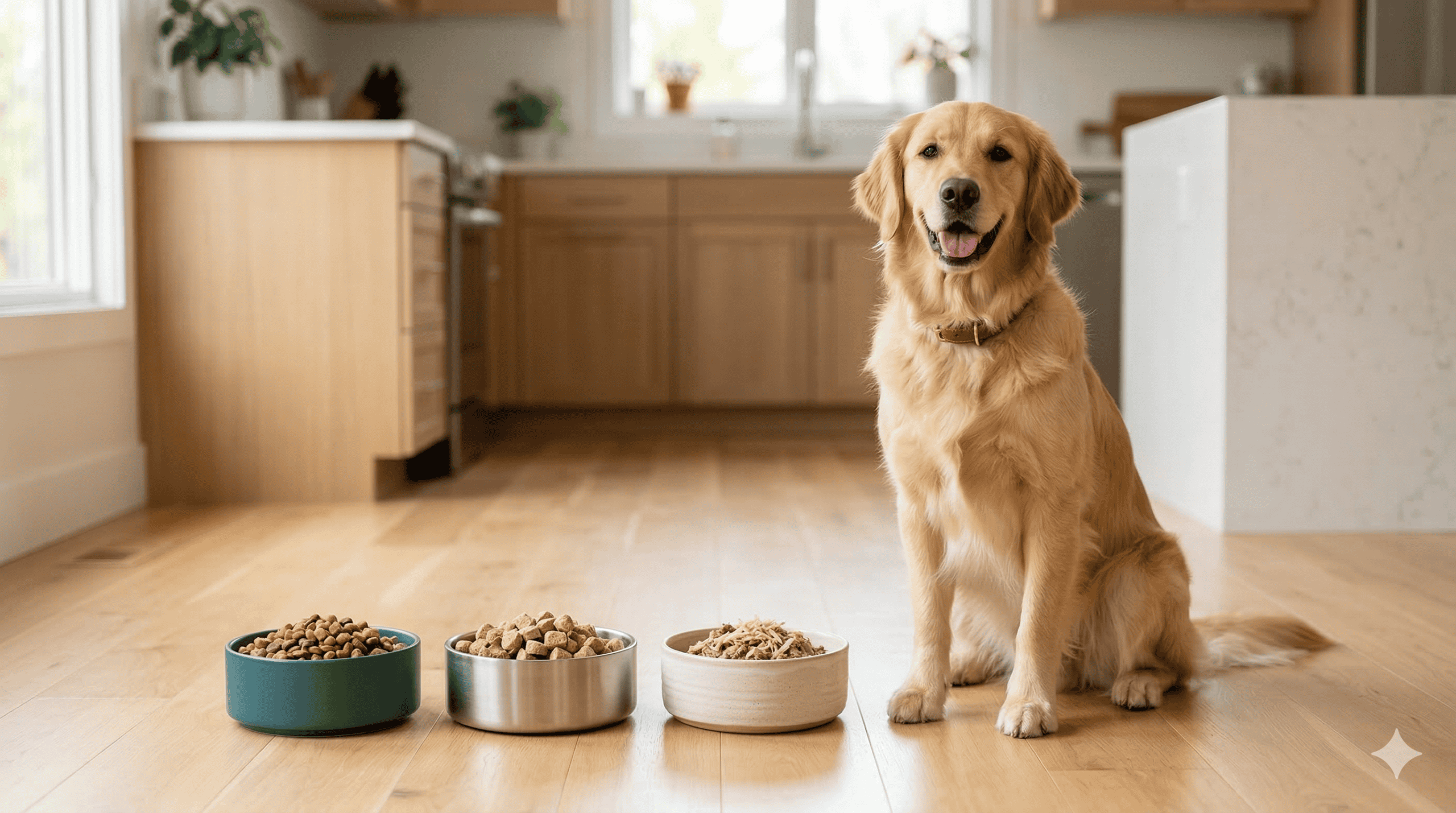
Golden Retrievers are one of America’s most beloved dog breeds, and finding the best dog food for golden retrievers is essential for their health and happiness. They’re loyal, energetic, and endlessly affectionate. But keeping your Golden healthy and thriving requires more than just love—it requires the right nutrition. As a large breed prone to specific health concerns, Golden Retrievers need high-quality dog food formulated to support their unique needs.
We’ve tested and researched dozens of dog food options to bring you our top picks for Golden Retrievers. Whether you’re looking for veterinary-recommended options, grain-free formulas, or budget-friendly choices, we’ll help you find the best food for your Golden’s age, activity level, and health needs.
Our Top Picks at a Glance
| Product | Price | Best For | Protein |
|---|---|---|---|
| Royal Canin Golden Retriever Adult | $110/30 lb | Breed-specific nutrition | 25% |
| Hill’s Science Diet Large Breed Adult | $86/35 lb | Digestive health | 23% |
| Purina Pro Plan Large Breed Adult | $77/34 lb | All-around health | 26% |
| Blue Buffalo Life Protection Large Breed | $72/30 lb | Natural ingredients | 24% |
| Orijen Original Dry Dog Food | $134/31 lb | High-protein performance | 38% |
| Taste of the Wild High Prairie | $59/28 lb | Grain-free budget option | 27% |
Why Nutrition Matters for Golden Retrievers
Golden Retrievers are large-breed dogs with specific nutritional requirements that differ from small breeds. Adult Golden Retrievers typically weigh between 55-75 pounds and require foods with appropriate calorie counts to prevent obesity—a common health issue in the breed.
We recommend looking for foods with:
- Balanced fat and protein: Golden Retrievers are active dogs that need adequate protein (at least 22%) and healthy fats for joint support and coat health
- Controlled calcium and phosphorus: Proper mineral ratios prevent developmental orthopedic disease in large breeds
- Joint-supporting ingredients: Glucosamine and chondroitin help prevent hip dysplasia and arthritis
- Antioxidants: Support cognitive function and immune health as Goldens age
- Fiber content: Aids digestive health and helps maintain healthy weight
A typical adult Golden Retriever needs between 1,200-1,500 calories per day, depending on activity level and metabolism. Overweight Goldens are at higher risk for hip dysplasia, heart disease, and diabetes. According to the American Kennel Club, proper nutrition is critical for managing these breed-specific health challenges.
Top Picks: Best Dog Food for Golden Retrievers – Detailed Reviews
1. Royal Canin Golden Retriever Adult ($110 for 30 lb bag)
Royal Canin holds the gold standard for breed-specific nutrition, and their Golden Retriever formula lives up to the reputation.
What We Like:
- Specifically formulated for Golden Retrievers’ unique digestive and coat needs
- Moderate calorie content (375 calories per cup) helps maintain ideal weight
- Contains optimal omega-3 to omega-6 ratio for beautiful coat and skin health
- Includes joint support ingredients (glucosamine and chondroitin)
- Highly digestible formula reduces stool quality issues
Nutrition Profile:
- Protein: 25%
- Fat: 15%
- Fiber: 4.5%
- Calories: 375 per cup
Price Per Serving: At $110 for a 30-pound bag, you’re paying approximately $3.67 per pound, or about $1.47 per day for an average-sized Golden Retriever eating 2 cups daily.
Best For: Owners who want a scientifically formulated solution designed specifically for their Golden Retriever’s needs and are willing to invest in premium breed-specific nutrition.
Drawbacks: Premium pricing. Some Goldens with sensitive stomachs may need a transition period.
2. Hill’s Science Diet Adult Large Breed ($86 for 35 lb bag)
Hill’s Science Diet is one of the most recommended brands by veterinarians, and their large breed formula is an excellent all-around choice.
What We Like:
- Developed with veterinary nutritionists for digestive health
- Optimal mineral content for bone development and maintenance
- Highly digestible (89% digestibility on average)
- Includes natural omega-3 and omega-6 for coat health
- More affordable than breed-specific options
- Backed by decades of veterinary research
Nutrition Profile:
- Protein: 23%
- Fat: 13%
- Fiber: 3.2%
- Calories: 350 per cup
Price Per Serving: At $86 for a 35-pound bag, you’re paying approximately $2.46 per pound, or about $0.98 per day for an average Golden.
Best For: Owners looking for a vet-approved option with solid nutritional science and a reasonable price point. Great for Goldens with digestive sensitivities.
Drawbacks: Less specialized than breed-specific formulas. Contains corn meal, which some owners prefer to avoid.
3. Purina Pro Plan Adult Large Breed ($77 for 34 lb bag)
Purina Pro Plan bridges the gap between premium pricing and practical nutrition, offering quality ingredients without the breed-specific premium.
What We Like:
- Higher protein content (26%) supports muscle maintenance
- Added probiotics support digestive health
- Glucosamine for joint support
- Real chicken as first ingredient
- Excellent value for a premium brand
- Available at most retailers for convenient purchasing
Nutrition Profile:
- Protein: 26%
- Fat: 14%
- Fiber: 4%
- Calories: 360 per cup
Price Per Serving: At $77 for a 34-pound bag, you’re paying approximately $2.26 per pound, or about $0.81 per day for an average Golden.
Best For: Budget-conscious owners who don’t want to sacrifice quality. Works well for active Goldens that need higher protein.
Drawbacks: Contains soy, which some dogs are sensitive to. Less specialized than breed-specific formulas.
4. Blue Buffalo Life Protection Formula Large Breed Adult ($72 for 30 lb bag)
Blue Buffalo emphasizes natural ingredients without poultry by-products, appealing to owners seeking cleaner ingredient lists.
What We Like:
- LifeSource Bits formula with antioxidants, vitamins, and minerals
- No by-products, corn, wheat, or soy
- Contains real chicken and fish meals
- Glucosamine and chondroitin for joint health
- L-Carnitine to help maintain healthy body weight
Nutrition Profile:
- Protein: 24%
- Fat: 14%
- Fiber: 5%
- Calories: 357 per cup
Price Per Serving: At $72 for a 30-pound bag, you’re paying approximately $2.40 per pound, or about $0.96 per day for an average Golden.
Best For: Owners who prioritize natural ingredients and want a balanced formula without common allergens. A great middle-ground between premium and budget options.
Drawbacks: Some Goldens experience digestive upset when first transitioning. Slightly lower protein than competitors.
5. Orijen Original Dry Dog Food ($134 for 31 lb bag)
Orijen represents the ultra-premium tier—biologically appropriate nutrition with exceptional ingredient quality for active Golden Retrievers.
What We Like:
- 85% quality animal ingredients (free-run chicken, turkey, wild-caught fish)
- WholePrey ratios include meat, organs, and cartilage
- No synthetic supplements needed due to ingredient quality
- Freeze-dried liver coating for exceptional palatability
- Grain-free with low glycemic carbohydrates
Nutrition Profile:
- Protein: 38%
- Fat: 18%
- Fiber: 3%
- Calories: 400 per cup
Price Per Serving: At $134 for a 31-pound bag, you’re paying approximately $4.32 per pound, or about $1.23 per day for an average Golden eating 2 cups daily.
Best For: Very active Golden Retrievers, hunting dogs, or performance dogs. Owners who believe in meat-based, high-protein nutrition and can justify the premium cost.
Drawbacks: Significantly more expensive than other options. The high protein and fat content may be excessive for less active Goldens, potentially contributing to weight gain.
6. Taste of the Wild High Prairie ($59 for 28 lb bag)
Taste of the Wild offers grain-free nutrition at a price point more accessible than super-premium brands, making it our best budget-friendly option.
What We Like:
- Grain-free formula with roasted bison and venison
- Probiotics for digestive support
- Affordable pricing without sacrificing quality
- Contains sweet potato and legumes for fiber
- High meat content without excessive price tag
- Good alternative protein sources reduce allergy concerns
Nutrition Profile:
- Protein: 27%
- Fat: 15%
- Fiber: 4.5%
- Calories: 370 per cup
Price Per Serving: At $59 for a 28-pound bag, you’re paying approximately $2.11 per pound, or about $0.75 per day for an average Golden.
Best For: Budget-conscious owners who want grain-free, high-quality nutrition. Good for Goldens with chicken or beef sensitivities.
Drawbacks: Some dogs experience digestive upset when switching to grain-free formulas. Contains legumes, which some recent studies suggest caution with for large breeds (though evidence remains inconclusive).
Feeding Your Golden Retriever: Practical Guidelines
The best dog food is only helpful if you’re feeding the right amount. Golden Retrievers are prone to obesity, and overweight Goldens have significantly shortened lifespans.
Adult Golden Retrievers (1-7 years):
- Feed 2 cups per day, split into two meals
- Adjust based on activity level and body condition score
- Active Goldens may need up to 3 cups daily
- Monitor weight monthly
Senior Golden Retrievers (7+ years):
- Reduce calories by 15-20%
- Consider formulas with added joint support
- Feed 1.5-2 cups daily in two meals
- Monitor for dental issues and adjust kibble size if needed
Growing Puppies (8 weeks-12 months):
- Use large-breed puppy formulas to control growth rate
- Feed 3-4 meals daily until 6 months, then transition to 2-3 meals
- Follow package guidelines closely to prevent developmental orthopedic disease
Ingredients to Look For in the Best Dog Food for Golden Retrievers
When evaluating dog foods for your Golden Retriever, we recommend checking for these ingredients that make a difference in finding the best dog food for golden retrievers:
Protein Sources: Look for specific meat sources listed first: chicken, beef, fish, or lamb. “Meat meal” and “chicken meal” are concentrated protein sources and excellent inclusions. Avoid “meat by-products.”
Healthy Fats: Omega-3 and omega-6 fatty acids support coat health and reduce inflammation. Look for fish oil, chicken fat, or flaxseed listed in the ingredients.
Digestible Carbohydrates: Sweet potatoes, brown rice, and oats are preferable to corn or wheat. Some Goldens thrive on grain-free formulas, while others do better with whole grains.
Joint Support: Glucosamine, chondroitin, and MSM are especially important for large breeds prone to hip dysplasia.
Ingredients to Avoid
By-Products and Meal: While not harmful, they indicate lower-quality protein sources. Specific meats are preferable.
Excessive Fillers: Corn, soy, and wheat are cheap fillers that provide little nutritional value and often trigger sensitivities.
Artificial Preservatives: BHA, BHT, and ethoxyquin are outdated. Look for vitamins E and C as natural preservatives.
Artificial Colors and Flavors: Unnecessary for dogs and associated with behavioral issues in some studies.
Transitioning to a New Food
When switching foods, do it gradually over 7-10 days to avoid digestive upset:
Days 1-3: 75% old food, 25% new food Days 4-6: 50% old food, 50% new food Days 7-10: 25% old food, 75% new food Day 11+: 100% new food
Monitor your Golden’s stool consistency, energy level, and appetite throughout the transition. If digestive issues persist after 10 days, consult your veterinarian.
Health Considerations for Golden Retrievers
Golden Retrievers are predisposed to several health conditions that nutrition can help support. According to VetStreet, working with your veterinarian to address breed-specific health concerns through proper nutrition is essential.
Hip and Elbow Dysplasia: Feed foods with controlled calcium and phosphorus, plus joint support ingredients. Maintain lean body weight to reduce joint stress.
Heart Disease: Golden Retrievers are prone to hemangiosarcoma and dilated cardiomyopathy. Omega-3 fatty acids and antioxidants support heart health. Some studies suggest limiting taurine-poor grain-free diets.
Cancer: Antioxidants and a lean body weight may reduce cancer risk. We recommend discussing cancer prevention with your veterinarian.
Ear Infections: Allergies often manifest as ear problems. If your Golden frequently has ear infections, discuss potential food sensitivities with your vet. PetMD notes that proper nutrition can help reduce allergy-related ear issues.
FAQ: Dog Food for Golden Retrievers
Q: How much should I feed my adult Golden Retriever? A: Most adult Golden Retrievers need 2-2.5 cups of quality dog food daily, split into two meals. However, this varies based on activity level, age, and metabolism. Aim for a lean body condition where you can feel their ribs but not see them prominently.
Q: Is grain-free dog food better for Golden Retrievers? A: Grain-free isn’t necessarily better. While some Goldens thrive on grain-free diets (especially those with grain allergies), others do perfectly well with whole grains like brown rice and oats. Grain-free isn’t required unless your Golden has a specific sensitivity. Consult your veterinarian about what’s best for your dog.
Q: Can I feed my Golden Retriever human food? A: Some human foods are safe in small amounts (carrots, green beans, pumpkin), but they shouldn’t exceed 10% of daily calories. Avoid chocolate, grapes, raisins, avocado, and foods containing xylitol, which are toxic to dogs. Stick with high-quality dog food as the primary nutrition source.
Q: How often should I switch my Golden’s food? A: You don’t need to switch foods frequently. In fact, rotating brands can upset sensitive stomachs. Find a high-quality food your Golden thrives on and stick with it. You can vary protein sources seasonally (chicken in summer, beef in winter) if your dog tolerates it well.
Q: What’s the best food for a Golden Retriever with allergies? A: If your Golden has food allergies, work with your veterinarian to identify the culprit. Common allergens include beef, chicken, wheat, and corn. Limited ingredient diets, novel protein sources (like venison or duck), and elimination diets can help identify triggers. Consider foods with single, clearly-defined protein sources.
Q: When should I transition my Golden Retriever to senior dog food? A: Most Goldens are considered seniors around age 7. Senior formulas typically have fewer calories, added joint support, and sometimes enhanced cognitive support. However, if your Golden is very active, you might stick with adult formulas longer. Discuss the timing with your veterinarian based on your individual dog’s health.
The Bottom Line
Finding the best dog food for golden retrievers depends on your dog’s individual needs, your budget, and your nutritional priorities. Royal Canin Golden Retriever Adult is our top pick for breed-specific optimization, while Purina Pro Plan offers excellent value for budget-conscious owners. For grain-free options, Taste of the Wild delivers quality at an accessible price.
Regardless of which food you choose, focus on maintaining your Golden’s ideal body weight, consulting regularly with your veterinarian, and watching for any signs of digestive upset or health changes. A healthy, happy Golden Retriever is the best indicator that you’ve found the right food when you’re selecting the best dog food for golden retrievers.