If you’re thinking about bringing your first dog home, you’re probably wondering which breed will be the best fit. The truth is, the best dogs for first time owners are breeds that are easy to train, adaptable to different living situations, and forgiving of beginner mistakes. They tend to have calm temperaments, minimal health issues, and a genuine desire to please their humans.
We’ve put together this guide to help you navigate the most beginner-friendly breeds out there. Each has its own personality and needs, but all share one thing in common: they make excellent companions for people taking on dog ownership for the first time.
What Makes the Best Dogs for First Time Owners?
The right first dog should be trainable, forgiving, and adaptable. Our selections have all been tested by thousands of first-time owners who’ve found success with these breeds. According to the American Kennel Club, ease of training and stable temperament are the two most critical factors for first-time owners.
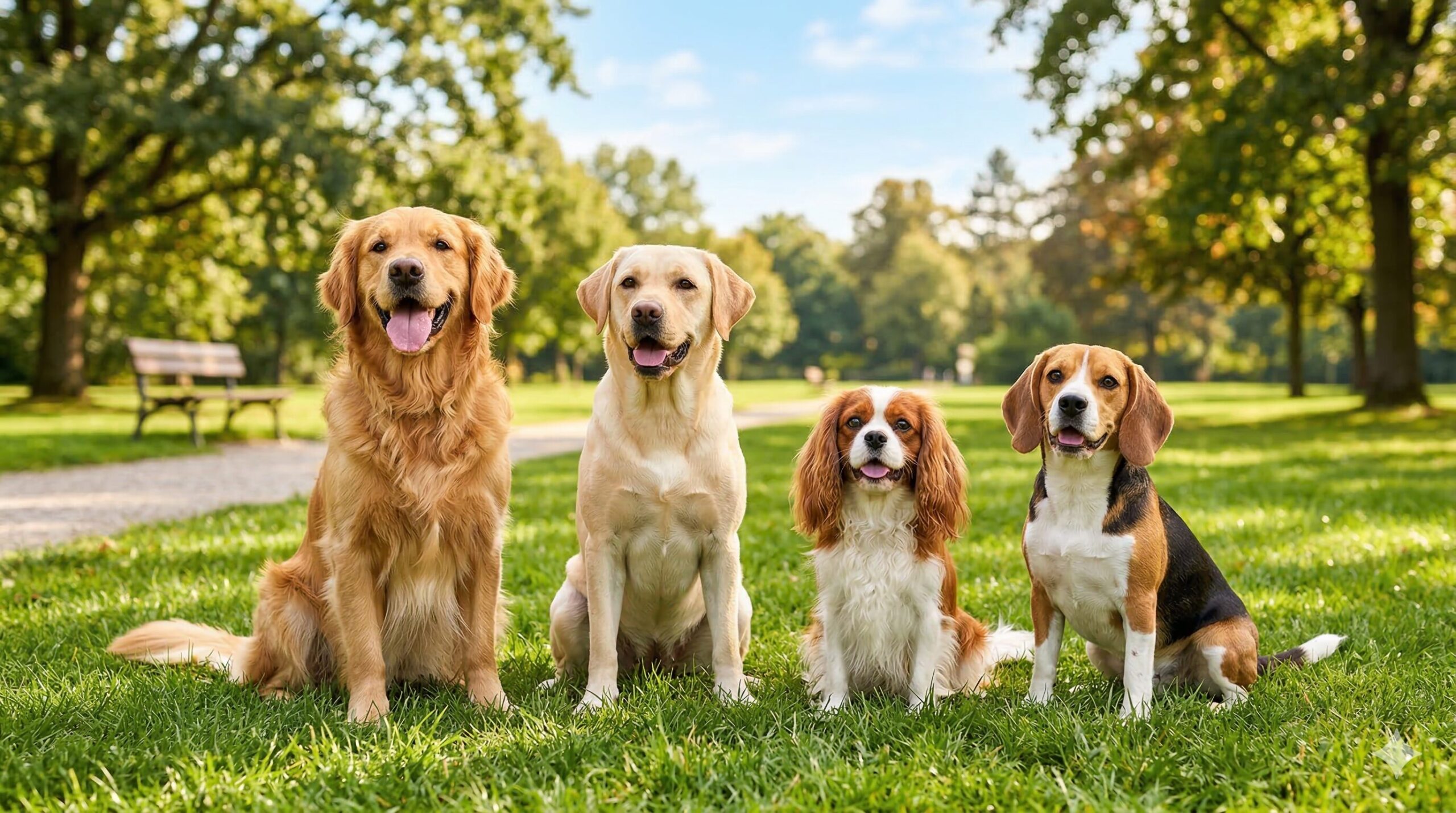
1. Golden Retriever — The All-Around Best Choice
Weight: 55-75 lbs | Lifespan: 10-12 years | Energy Level: High | Trainability: Excellent (9/10)
Golden Retrievers consistently top the list for first-time dog owners, and for good reason. These dogs are practically built for beginners. They’re eager to please, incredibly food-motivated, and respond beautifully to positive reinforcement training.
Goldens are social butterflies who get along with everyone—kids, other dogs, cats, and even strangers. They thrive on human companionship and genuinely want to make you happy. Their intelligence means they learn commands quickly, usually within 5-10 repetitions. They’re also forgiving of training inconsistencies, which is crucial when you’re figuring out how to be a dog owner.
Watch-outs: These dogs shed heavily year-round and need regular brushing to keep it manageable. They also require 60+ minutes of daily exercise. If you live in a small apartment or travel frequently for work, a Golden might be too high-maintenance energy-wise. They can also be prone to certain health issues like hip dysplasia and heart disease, so work with reputable breeders.
We’ve written extensively about Golden Retriever care if you want to dive deeper into their specific needs.
2. Labrador Retriever — The Adaptable Athlete
Weight: 55-80 lbs | Lifespan: 10-12 years | Energy Level: High | Trainability: Excellent (9/10)
Labs are the most popular dog breed in the United States for a reason. They’re incredibly adaptable, thriving in everything from suburban homes to city apartments as long as they get enough exercise. Like Goldens, they’re food-motivated, easy to train, and love being part of the family.
Labradors have shorter coats than Goldens, which means less grooming time (though they still shed). They’re athletic and love water, making them perfect if you enjoy hiking, swimming, or outdoor activities. Their playful nature and loyalty make them excellent family dogs.
Watch-outs: Labs need consistent exercise—at least 60 minutes daily—or they can develop destructive habits. They’re prone to weight gain, so monitor portions carefully. Like Goldens, they can suffer from hip dysplasia and other joint issues. Start with a reputable breeder who health-tests their dogs. PetMD notes that Labs rank among the easiest large breeds to train due to their food motivation and eagerness to please.
3. Cavalier King Charles Spaniel — The Low-Maintenance Sweetheart
Weight: 12-18 lbs | Lifespan: 12-15 years | Energy Level: Moderate | Trainability: Very Good (8/10)
If you love the idea of a dog but don’t want the exercise demands of a retriever, the Cavalier King Charles Spaniel might be perfect for you. These gentle, affectionate dogs are happiest sitting next to you on the couch. They’re medium-energy, requiring only about 30 minutes of daily activity.
Cavaliers are naturally sweet-natured and rarely show aggression. They’re eager to please and respond well to positive training. Their small to medium size makes them adaptable to any living situation. They’re excellent with children and other pets.
Watch-outs: Cavaliers do shed moderately and need regular brushing. They can be prone to heart disease, particularly mitral valve disease, so health screening is essential. The American Kennel Club’s Cavalier breed page recommends cardiac evaluations for breeding stock. Their smaller size means they’re more fragile around very young children, though they’re patient and gentle.
4. Poodle (Standard or Miniature) — The Hypoallergenic Genius
Weight: 45-70 lbs (Standard) or 10-15 lbs (Miniature) | Lifespan: 12-15 years | Energy Level: Moderate to High | Trainability: Excellent (10/10)
Poodles often surprise first-time owners with how intelligent and trainable they are. Among dog breeds, they rank second only to Border Collies in intelligence. They’re hypoallergenic or low-shedding (depending on coat type), making them ideal if you have allergies.
Poodles are eager to please and pick up commands incredibly quickly. They’re also surprisingly athletic and enjoy activities like dock diving and agility competitions. Despite their “fancy” reputation, they’re down-to-earth family dogs that love playtime and cuddles.
Watch-outs: Poodles require regular grooming every 4-6 weeks to keep their curly coats mat-free. This is an ongoing expense. They also need consistent exercise and mental stimulation—boredom can lead to destructive behavior. Without proper socialization, they can develop separation anxiety.
5. Bichon Frise — The Apartment-Friendly Option
Weight: 12-18 lbs | Lifespan: 14-15 years | Energy Level: Moderate | Trainability: Very Good (8/10)
Don’t let their fluffy appearance fool you—Bichon Frises are sturdy, confident little dogs. They’re small enough for any living situation but athletic enough to keep up with an active lifestyle. Their cheerful nature and adaptability make them excellent first-time dogs.
Bichons are intelligent and eager to please, though they can be slightly more independent than retrievers. They’re low-shedding, though they do need regular grooming. These dogs are excellent with children and typically get along well with other pets.
Watch-outs: Like other small breeds, Bichons can develop “small dog syndrome” if not properly socialized and trained. They need consistent boundaries. They also require professional grooming every 4-6 weeks. Some can be prone to allergies and skin sensitivities.
6. French Bulldog — The Low-Energy Companion
Weight: 20-28 lbs | Lifespan: 10-12 years | Energy Level: Low | Trainability: Good (7/10)
French Bulldogs are the ultimate low-maintenance companions. With their charming personalities and minimal exercise needs, they’re perfect for busy people or those living in apartments. A 20-30 minute daily walk is usually sufficient.
Frenchies are affectionate, playful, and genuinely enjoy being around their humans. They’re sturdy enough for families with older children but calm enough for seniors. Training them is generally straightforward, though they can have a stubborn streak.
Watch-outs: French Bulldogs are prone to breathing difficulties due to their flat faces, so avoid strenuous exercise in heat. They can’t regulate body temperature well and are sensitive to extremes. They also tend to snore and snuffle. Hip dysplasia and other genetic issues are common, so choose breeders carefully. Additionally, we have a detailed guide on French Bulldog shedding if you’re concerned about hair around your home.
7. Shih Tzu — The Lap Dog with Personality
Weight: 9-16 lbs | Lifespan: 10-16 years | Energy Level: Low to Moderate | Trainability: Moderate (6/10)
Shih Tzus are bred to be companions, and they excel at the job. These little dogs are calm, affectionate, and content spending most of their day with their favorite human. They’re perfect for first-timers who want an easygoing pet.
Shih Tzus are sturdy for their size and adaptable to any living situation. They’re good with children and other pets when properly socialized. Their independent nature means they sometimes test boundaries, but they’re generally eager to please.
Watch-outs: Shih Tzus require professional grooming every 4-6 weeks, or you’ll need to commit to daily brushing. Their long coats mat easily. Some can be stubborn, requiring patience during training. They can also develop separation anxiety if left alone for long periods.
8. Boxer — The Loyal Family Protector
Weight: 65-80 lbs | Lifespan: 10-12 years | Energy Level: High | Trainability: Very Good (8/10)
Boxers are enthusiastic, playful, and deeply loyal to their families. Despite their muscular build, they’re often described as “clowns” because of their silly, affectionate nature. They form incredibly strong bonds with their owners and are excellent with children.
These dogs are intelligent and eager to please, making them trainable despite their stubborn moments. Their short coats require minimal grooming. Boxers are protective without being aggressive when properly socialized, making them excellent family dogs.
Watch-outs: Boxers are high-energy and need 60+ minutes of daily exercise. Without it, they become destructive. They can be prone to jumping and knocking over small children in excitement, so supervision is important. Heat sensitivity is also a concern due to their short snouts. Always buy from health-tested breeders to avoid heart conditions.
9. Greyhound (Retired Racing Dogs) — The Couch Potato Sprinter
Weight: 50-70 lbs | Lifespan: 10-13 years | Energy Level: Low (despite their breed reputation) | Trainability: Very Good (8/10)
Retired racing Greyhounds might seem like an unusual choice for first-timers, but they’re actually excellent family dogs. People are surprised to learn that Greyhounds are couch potatoes indoors—they need only brief daily walks and are perfectly happy lounging at home.
These dogs are calm, gentle, and surprisingly affectionate once they’ve transitioned from racing life. They’re elegant but not delicate, and they bond deeply with their families. Many have wonderful personalities and love being around people.
Watch-outs: Greyhounds can have a prey drive, so supervise around small pets. They’re sensitive to cold due to their thin coats and may need sweaters in winter. They can also be sensitive to anesthesia and certain medications. Always adopt through rescue organizations that understand their background and can help match you with the right dog. Some may have anxiety issues from their previous life that require patience and training.
10. Whippet — The Gentle Racing Companion
Weight: 25-40 lbs | Lifespan: 12-15 years | Energy Level: Moderate to High | Trainability: Very Good (8/10)
Whippets are often called “the poor man’s Greyhound,” and they’re excellent for first-timers who want a smaller version with slightly less intensity. These dogs are sweet-natured, gentle, and surprisingly quiet. They love a good run but are also content with moderate daily exercise.
Whippets are sensitive, responsive dogs that thrive with positive training methods. They’re affectionate with their families and do well with children. Their short coats require minimal grooming, and they’re generally healthy.
Watch-outs: Like Greyhounds, Whippets have prey drive and may chase small animals. They can be sensitive and may not respond well to harsh corrections. They’re also sensitive to cold and may need sweaters. Some can develop separation anxiety if left alone too long.
How to Choose the Right Breed for You
When selecting from these best dogs for first time owners, consider:
- Your lifestyle: Do you want an active running partner, or are you looking for a couch companion?
- Living situation: Apartment or house? Urban or rural?
- Time commitment: How much grooming and training can you realistically handle?
- Family composition: Do you have young children? Other pets?
- Budget: Factor in not just food and supplies, but grooming, vet care, and potential health issues.
FAQ: First-Time Dog Owner Questions
Q: What’s the easiest dog breed for a first-time owner?
A: Golden Retrievers and Labrador Retrievers top the list because they’re food-motivated, eager to please, and forgiving of training mistakes. If you want something lower energy, Cavalier King Charles Spaniels and French Bulldogs are equally beginner-friendly.
Q: How much time should I dedicate to training a new dog?
A: Aim for at least 15-30 minutes of focused training daily, split into 2-3 sessions. Consistency matters more than duration. Most beginner-friendly breeds pick up basic commands within 2-4 weeks of consistent training.
Q: Are there good dogs for apartments?
A: Absolutely. French Bulldogs, Cavalier King Charles Spaniels, Bichon Frises, and Shih Tzus are all excellent apartment dogs. The key is meeting their exercise needs and preventing excessive barking through proper training.
Q: Should I get a puppy or an adult dog as a first-timer?
A: Adult dogs are often easier for first-timers because they’re past the destructive puppy phase and may already be house-trained. Puppies require more work and patience. Consider adopting an adult dog from a rescue organization.
Q: How do I know if I’m ready for dog ownership?
A: Ask yourself: Can you commit 10-15 years? Do you have time for daily exercise and training? Can you afford vet care, food, and unexpected medical expenses? Are you prepared for the time commitment? If you answer yes to all, you’re probably ready.
Q: What if the dog doesn’t work out?
A: It’s okay to admit a mismatch early. If after a few weeks you realize the breed or individual dog isn’t right for you, contact a rescue organization. It’s better to find a more suitable match than struggle for years. Good rescues understand this and will help rehome the dog.