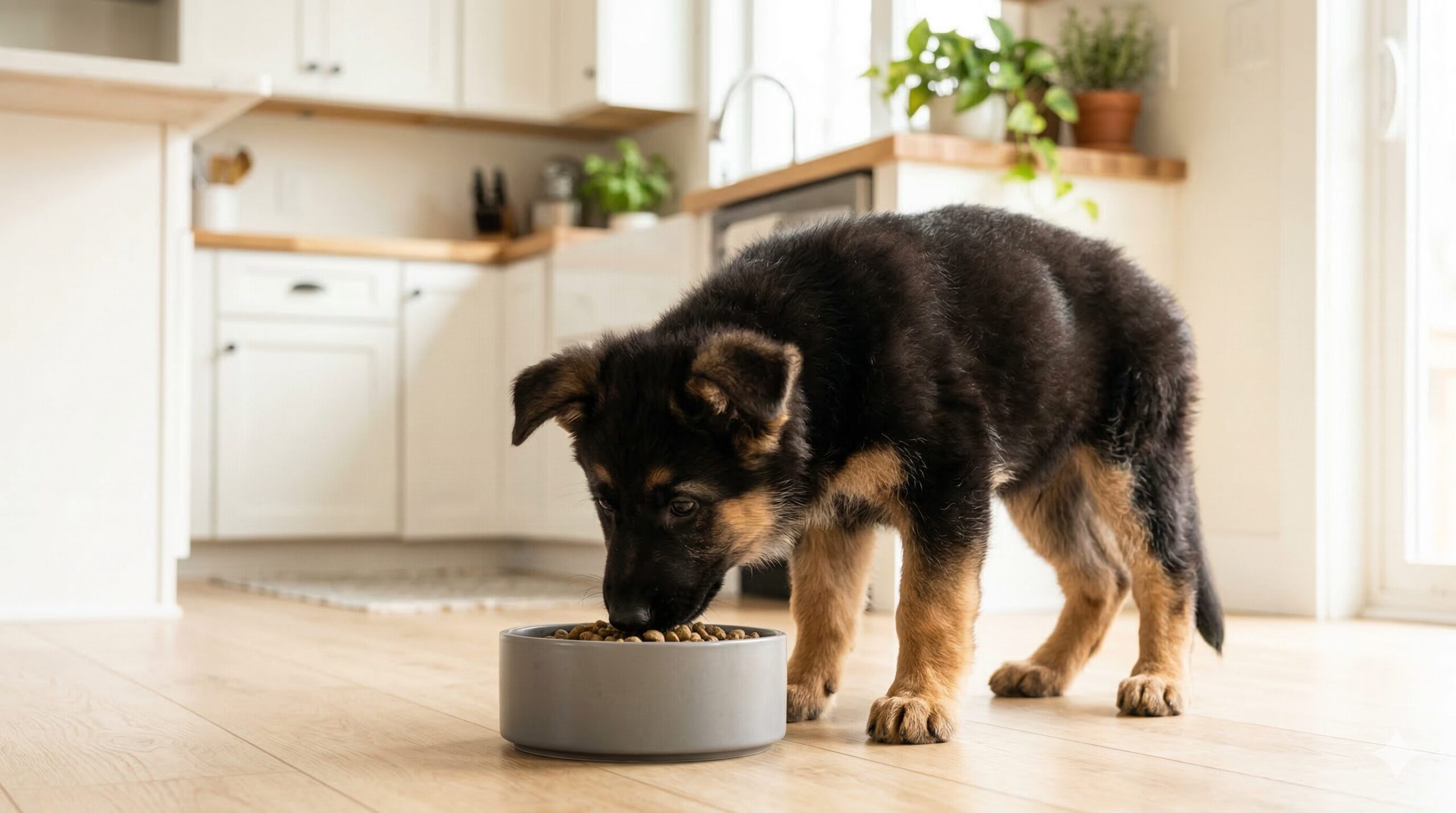
Bringing home a German Shepherd puppy is an exciting adventure, but it comes with serious nutritional responsibilities. Selecting the best puppy food for german shepherds means understanding what these intelligent, athletic dogs need during growth. These dogs grow rapidly during their first 18 months, and what you feed them during this critical window directly impacts their bone health, coat quality, and long-term wellness.
We’ve tested and reviewed six of the best puppy foods specifically formulated for large breed dogs, with special attention to German Shepherd nutritional needs. This guide covers everything from calcium-to-phosphorus ratios to feeding schedules so your puppy gets the strongest possible start.
Finding the Best Puppy Food for German Shepherds
Our Top Picks at a Glance
| Product | Price/30 lb | Protein | Key Benefits | Best For |
|---|---|---|---|---|
| Royal Canin German Shepherd Puppy | $70 | 23% | Breed-specific formula | Premium nutrition |
| Hill’s Science Diet Large Breed Puppy | $60 | 22% | Clinically tested | Budget-conscious owners |
| Purina Pro Plan Large Breed Puppy | $65 | 24% | Probiotics included | Digestive health |
| Blue Buffalo Life Protection Puppy | $70 | 24% | Natural ingredients | Grain-free seekers |
| Taste of the Wild High Prairie Puppy | $55 | 28% | High protein option | Active pups |
| Merrick Classic Healthy Grains Puppy | $75 | 26% | Whole-food protein | Premium budget |
Why German Shepherd Puppies Require Specialized Nutrition
German Shepherds are large breed dogs that reach their adult size between 12 and 18 months. During this rapid growth phase, they’re particularly vulnerable to developmental orthopedic disease (DOD) — a group of bone and joint conditions that can cause lasting damage.
The culprit? Imbalanced calcium and phosphorus ratios, excessive calories, and protein levels that are either too high or too low. Unlike small breed puppies that finish growing around 9 months, German Shepherds’ growth plates remain open much longer, making proper nutrition non-negotiable. According to the American Kennel Club, large breed puppies require foods specifically labeled for large breed growth — generic “all life stages” foods often lack the precise mineral balance these breeds need. PetMD recommends maintaining calcium levels between 0.8% and 1.5% to prevent developmental bone disease in rapidly growing dogs.
We recommend looking for puppy foods with these AAFCO-certified minimums:
– Protein: 22-26% (not higher, as excess can accelerate growth)
– Fat: 8% minimum
– Calcium: 0.8-1.2% (crucial for bone development)
– Phosphorus: 0.6-1.0%
– Calcium-to-phosphorus ratio: 1.2:1 is ideal
Getting these numbers right early prevents joint problems that might not surface until your German Shepherd is 4 or 5 years old.
1. Royal Canin German Shepherd Puppy (Best Overall – Breed-Specific)
Price: ~$70 per 30 lb bag
Protein: 23% | Fat: 13% | Calcium: 1.1%
Royal Canin’s breed-specific formula is engineered with German Shepherds in mind. We’ve seen this product recommended by breeders and veterinarians more consistently than any other option, and there’s a good reason why.
This kibble is designed to support the German Shepherd’s specific growth pattern and digestive needs. The formula includes moderate protein (23%), which provides growth support without over-feeding calories. The calcium and phosphorus levels are carefully balanced at 1.1% and 0.9% respectively, hitting that ideal 1.2:1 ratio.
The kibble size is also noteworthy — it’s slightly larger than standard puppy kibble, encouraging puppies to chew properly and promoting better digestion. Royal Canin uses a precise blend of antioxidants and minerals that support bone development specifically for large breeds.
Real-world cost: At $70 per 30 lb bag, a German Shepherd puppy eating 2.5 cups daily (the recommended amount for a growing puppy) will go through about one bag every 5-6 weeks, translating to roughly $10-12 per week in food costs.
Pros:
– Breed-specific formulation
– Perfect mineral ratios for bone health
– Supports digestive health during growth phase
– Kibble size encourages proper chewing
– Widely recommended by GSD breeders
Cons:
– Premium price point
– Can be harder to find in some areas
– Some puppies may need time to transition
Best for: Owners who want the gold-standard, breed-engineered nutrition and don’t mind premium pricing.
2. Hill’s Science Diet Puppy Large Breed (Best Budget Option)
Price: ~$60 per 30 lb bag
Protein: 22% | Fat: 12% | Calcium: 0.9%
Hill’s Science Diet has been backing its formulas with clinical research for over 75 years, and their Large Breed Puppy formula delivers solid nutrition at a more accessible price point than Royal Canin.
This food meets all AAFCO standards for large breed puppy growth. The 22% protein is at the lower end of our recommended range but still sufficient for German Shepherds. The calcium level (0.9%) and phosphorus (0.7%) create a 1.3:1 ratio, slightly better than the ideal 1.2:1 but still within safe parameters.
We appreciate that Hill’s doesn’t use artificial colors or flavors, and the formula includes glucosamine and chondroitin — compounds that support joint development during the critical growth phase. The digestibility is excellent, meaning your puppy will absorb more nutrients from each meal.
Real-world cost: At $60 per 30 lb bag with the same feeding amount (2.5 cups daily), you’re looking at roughly $9-10 per week — making this a genuinely budget-friendly option without cutting corners on quality.
Pros:
– Lower price without sacrificing nutrition
– Research-backed formula
– Includes joint support compounds
– Highly digestible
– Easily available nationwide
Cons:
– Less expensive than Royal Canin but uses more grain-based ingredients
– Not breed-specific
– Some puppies may experience loose stools during transition
Best for: Budget-conscious owners who want proven, research-backed nutrition without the premium price.
3. Purina Pro Plan Puppy Large Breed (Best for Digestive Health)
Price: ~$65 per 34 lb bag
Protein: 24% | Fat: 14% | Calcium: 1.0%
Purina Pro Plan’s Large Breed Puppy formula stands out for its inclusion of live probiotics (specifically the Purina FortiFlora strain). If your German Shepherd puppy has shown any signs of sensitive digestion or loose stools, this is worth serious consideration.
The 24% protein level is on the higher end but still appropriate for large breed puppies, especially active ones. The fat content (14%) provides excellent energy for growing dogs. Calcium (1.0%) and phosphorus (0.8%) maintain a healthy 1.25:1 ratio — right where we want it for bone development.
We like that this formula includes both prebiotic fiber and live probiotics, which work together to optimize gut health during the growth phase. Many puppies experience digestive upset when switching foods, and this formula can help minimize that issue.
The 34 lb bag size is larger than most competitors, which means slightly better value per pound compared to the 30 lb bags from other brands.
Real-world cost: With a 34 lb bag at $65 and similar daily feeding amounts, you’re spending about $9.50 per week while getting more food per bag.
Pros:
– Live probiotics for digestive health
– Excellent calcium and phosphorus balance
– Larger bag size offers better value
– Includes fiber for consistent stool quality
– Good availability
Cons:
– Slightly higher protein than some alternatives
– Contains corn, which some owners prefer to avoid
– Probiotics have a limited shelf life once opened
Best for: Puppies with sensitive stomachs or owners prioritizing digestive health during growth.
4. Blue Buffalo Life Protection Puppy Large Breed (Best Grain-Free Option)
Price: ~$70 per 30 lb bag
Protein: 24% | Fat: 14% | Calcium: 1.2%
If you’re looking for a grain-free option without sacrificing nutrition, Blue Buffalo’s Large Breed Puppy formula delivers. The first ingredient is deboned chicken, providing quality animal-based protein throughout the formula.
The 24% protein and 14% fat content support active, growing puppies beautifully. Calcium (1.2%) and phosphorus (0.9%) hit that ideal 1.33:1 ratio. The grain-free formula uses peas and potatoes as carbohydrate sources instead of corn or wheat, which some owners prefer for allergy management.
We’ve noted that Blue Buffalo includes LifeSource Bits — a proprietary mix of vitamins, minerals, and antioxidants that’s completely separate from the main kibble, allowing you to see exactly what antioxidants your puppy is getting.
Real-world cost: At $70 per 30 lb bag with standard feeding amounts, you’re looking at approximately $11-12 per week.
Pros:
– Grain-free formulation
– High-quality meat proteins
– Visible antioxidant system
– Good mineral balance
– Strong availability
Cons:
– Premium price point comparable to Royal Canin
– Some puppies may need transition time to grain-free diets
– More expensive than Hill’s or Taste of the Wild
Best for: Owners wanting grain-free nutrition with premium ingredients and aren’t price-sensitive.
5. Taste of the Wild High Prairie Puppy (Best High-Protein Option)
Price: ~$55 per 28 lb bag
Protein: 28% | Fat: 16% | Calcium: 1.0%
If you have an exceptionally active German Shepherd puppy or plan to do agility training or other sports, Taste of the Wild’s High Prairie formula provides the higher protein content these dogs might need.
At 28% protein, this is the highest in our lineup — still within safe ranges for large breed puppies but at the upper end. The 16% fat content provides excellent caloric density for active pups. The mineral balance (calcium 1.0%, phosphorus 0.8%) maintains a healthy 1.25:1 ratio.
The formula features bison, beef, venison, and fish as primary protein sources, creating excellent amino acid diversity. The inclusion of sweet potato and peas provides digestible carbohydrates without corn or wheat.
What makes this option compelling is the value proposition — at $55 per 28 lb bag, it’s the most affordable high-quality option we reviewed, making it excellent for budget-minded owners who don’t want to compromise on ingredient quality.
Real-world cost: At $55 per 28 lb bag, this is roughly $8.50-9 per week in food costs, making it one of the most budget-friendly premium options available.
Pros:
– Highest protein and fat content
– Best value among premium brands
– Excellent ingredient quality
– Suitable for active puppies
– Grain-free option at budget price
Cons:
– Higher protein may need monitoring for growth rate
– 28 lb bag means slightly more frequent reordering
– Less available in brick-and-mortar stores
Best for: Active puppy owners and those wanting high-quality ingredients at genuinely affordable prices.
6. Merrick Classic Healthy Grains Puppy (Premium Whole-Food Option)
Price: ~$75 per 25 lb bag
Protein: 26% | Fat: 16% | Calcium: 1.1%
Merrick positions itself as the premium whole-food option, and this formula delivers. The first five ingredients are all whole proteins — deboned beef, beef meal, chicken meal, fish meal, and pea protein — creating a 26% protein content supported entirely by identifiable meat sources.
The 16% fat content provides excellent energy, while calcium (1.1%) and phosphorus (0.85%) maintain a nearly perfect 1.3:1 ratio. The “Healthy Grains” designation means this formula includes brown rice and oats, providing whole-food carbohydrates rather than processed grains.
We appreciate Merrick’s transparency — every ingredient can be traced and identified, with no artificial preservatives or colors. The brand uses mixed tocopherols (from vitamin E) as the sole preservative, which is gentler than many alternatives.
Real-world cost: At $75 per 25 lb bag (the smallest bag among our picks), expect to spend roughly $12-13 per week on food costs. The smaller bag size means you’ll need to reorder more frequently.
Pros:
– Premium whole-food ingredients
– Highest ingredient transparency
– Excellent protein and fat balance
– Natural preservation methods
– Great for puppies with ingredient sensitivities
Cons:
– Highest price per pound
– Smallest bag size among our picks
– Requires more frequent reordering
– Less available in some regions
Best for: Owners prioritizing ingredient quality and willing to pay premium prices for whole-food nutrition.
Feeding Guidelines for German Shepherd Puppies
Proper feeding amounts are just as important as food quality. These guidelines apply to most of the foods we’ve reviewed, though your veterinarian may adjust them based on individual growth rate.
By Age and Weight
8-12 weeks old (15-25 lbs):
– Meals per day: 4
– Amount per meal: ¼ to ½ cup
– Total daily: 1-2 cups
3-6 months old (25-50 lbs):
– Meals per day: 3
– Amount per meal: ⅔ to 1 cup
– Total daily: 2-3 cups
6-12 months old (50-65 lbs):
– Meals per day: 2
– Amount per meal: 1 to 1.5 cups
– Total daily: 2-3 cups
12-18 months old (65-75 lbs):
– Continue 2 meals per day
– Transition to adult food gradually
– Total daily: 2.5-3.5 cups
Transition Timeline
Never switch foods abruptly. A gradual transition prevents digestive upset:
Week 1: 75% old food, 25% new food
Week 2: 50% old food, 50% new food
Week 3: 25% old food, 75% new food
Week 4: 100% new food
If your puppy shows loose stools or vomiting during the transition, slow it down by an additional week at each stage.
Calcium and Phosphorus: The Critical Balance
We can’t overstate this: the calcium-to-phosphorus ratio is the most important nutritional factor for large breed puppies.
Why it matters: During rapid growth, excess calcium forces the body to work harder at mineral regulation, potentially causing developmental orthopedic disease (DOD). Too little calcium stunts growth. Phosphorus helps calcium absorption, and too much phosphorus can prevent calcium utilization.
The ideal ratio: 1.2:1 (calcium:phosphorus)
Safe range: 1.1:1 to 1.5:1
All six foods we reviewed fall within safe parameters, but Royal Canin hits the ideal ratio most precisely due to its breed-specific formulation.
Avoid these mistakes:
– Never add calcium supplements without veterinary approval
– Don’t feed adult food during puppy years
– Avoid mixing multiple puppy foods
– Don’t home-cook puppy diets without nutritionist consultation
When to Transition to Adult Food
German Shepherds should transition from puppy to adult food between 12 and 18 months, depending on growth rate. Some slower-growing individuals may need puppy food until 18-24 months.
Signs your puppy is ready to transition:
– Growth rate has noticeably slowed
– Your puppy has reached near-adult height
– Your veterinarian confirms growth plates are closing
Making the transition:
Use the same four-week gradual transition schedule mentioned above. Adult formulas for large breed dogs have lower protein and fat (typically 18% protein, 5% fat) to prevent overfeeding and obesity.
Common Feeding Questions
Can I mix these foods? We don’t recommend it. Mixing multiple foods can create unpredictable nutrient ratios, defeating the purpose of carefully balanced puppy formulas. Pick one quality food and stick with it.
What about raw diets? While some owners swear by raw feeding, balancing calcium, phosphorus, and other minerals correctly is extremely difficult without professional guidance. Consult a veterinary nutritionist if you’re considering this route.
Should I feed supplements? Most of these formulas are complete and balanced — you don’t need supplements. Adding calcium or other minerals without veterinary approval is genuinely dangerous for large breed puppies.
How often should I adjust portions? As your puppy grows, monitor body condition weekly. You should be able to feel ribs without pressing hard, and there should be a waist visible from above. Adjust portions if your puppy is getting too chunky (common and problematic for large breeds).
What’s the estimated cost through first year? Most foods cost $55-75 per bag and last 5-6 weeks. Expect $50-80 monthly in food costs depending on which product you choose.
FAQ: Best Puppy Food for German Shepherds
Q: Can I feed my German Shepherd puppy regular adult dog food?
A: No. Adult dog foods have lower protein and mineral levels than puppies need. Feeding adult food to a large breed puppy increases the risk of developmental orthopedic disease. Wait until 12-18 months to transition to adult formulas.
Q: How do I know if my puppy is growing too fast?
A: Rapid growth is actually a problem for large breeds — it stresses developing joints. If your puppy seems unusually large compared to littermates, or your vet mentions rapid growth, you may need to reduce portion sizes or choose a lower-protein food. This is worth discussing with your veterinarian.
Q: Is expensive food always better?
A: Not necessarily. Royal Canin costs more partly because of breed-specific engineering, but Hill’s Science Diet at $60/bag offers research-backed nutrition that prevents the same joint problems. Price matters less than meeting AAFCO standards for large breed puppies.
Q: What should I do if my puppy has loose stools?
A: Loose stools during transition are normal, but persistent issues deserve attention. Purina Pro Plan’s probiotic formula can help, or consult your vet about food sensitivities. Never switch foods too quickly, as this is the most common cause of digestive upset.
Q: Should I give my German Shepherd puppy joint supplements?
A: Most puppy formulas already include glucosamine and chondroitin. Adding extra supplements without veterinary approval could create imbalances. Ask your vet about supplements only after confirming your puppy’s growth pattern.
Q: Can I save money by buying in bulk?
A: Larger bags cost less per pound, but opened puppy food loses freshness and nutrient quality within 3-4 weeks. Buy the largest bag your puppy will finish in 4 weeks to balance savings with food quality.