
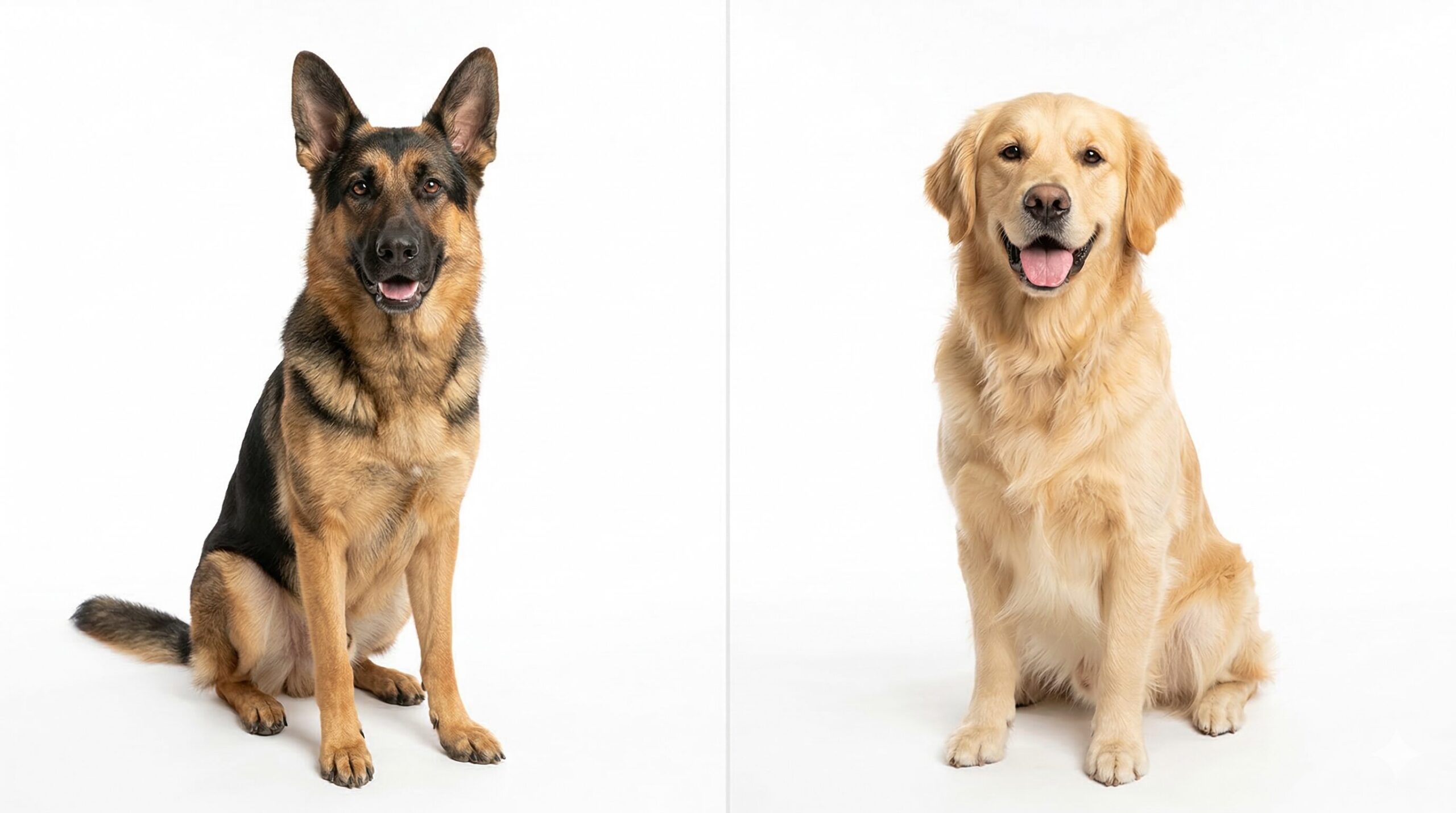
When comparing a german shepherd vs golden retriever, choosing between these breeds comes down to your lifestyle, living situation, and what you’re looking for in a canine companion. German Shepherds are intelligent, loyal, and excel as working dogs and protectors, making them ideal for experienced owners seeking a focused, task-oriented partner. Golden Retrievers are equally intelligent but more universally adaptable, thriving in families, as therapy dogs, and with first-time owners. Both are large, high-energy breeds that demand regular exercise and training—but their temperaments, roles, and care needs differ significantly. In this guide, we’ll break down the key differences so you can make an informed decision in the german shepherd vs golden retriever debate.
Quick German Shepherd vs Golden Retriever Comparison Table
| Attribute | German Shepherd | Golden Retriever |
|---|---|---|
| Weight | 75–95 lbs | 55–75 lbs |
| Height | 22–26 inches | 21–24 inches |
| Lifespan | 9–13 years | 10–12 years |
| Energy Level | High | High |
| Shedding | Heavy | Heavy |
| Trainability | Highly trainable (focused) | Highly trainable (eager to please) |
| Good with Kids | Excellent | Excellent |
| Guard Dog Potential | Excellent | Poor |
| Price Range | $500–$1,500 | $500–$3,000 |
Size and Physical Characteristics
In the german shepherd vs golden retriever comparison, physical differences are immediately noticeable. German Shepherds are larger and more muscular than their counterparts. Males typically stand 24–26 inches tall at the shoulder and weigh 75–95 pounds, with females slightly smaller. They have a distinctive sloped back, pointed ears, and a confident, athletic build.
Golden Retrievers are medium-to-large dogs, usually standing 21–24 inches tall and weighing 55–75 pounds. They’re more square-built than German Shepherds, with a longer coat and a friendlier overall appearance.
If you have limited space, a Golden Retriever’s slightly smaller frame might be easier to manage indoors. However, both breeds need room to move and exercise, so apartment living isn’t ideal for either.
Temperament and Personality: German Shepherd vs Golden Retriever
This is where the german shepherd vs golden retriever comparison truly diverges in important ways.
German Shepherds are incredibly intelligent, confident, and naturally protective. They bond intensely with their families and can be reserved or cautious with strangers. This trait makes them excellent guard dogs and working partners—they’re widely used in law enforcement, military, and protection roles. They thrive when they have a clear job or purpose. Without proper guidance, their protective instinct can sometimes manifest as anxiety or aggression, so consistent training and socialization from puppyhood are non-negotiable.
Golden Retrievers are famously friendly, outgoing, and sociable. They rarely meet a stranger they don’t like, which makes them terrible guard dogs but wonderful therapy and service dogs. They’re driven by a desire to please and to be around people, making them more forgiving of novice owners. Golden Retrievers excel in multi-pet households and tend to have an easygoing, playful disposition throughout their lives.
For families seeking a protective family guardian, the German Shepherd is unmatched. For those wanting an affectionate family companion, the Golden Retriever is hard to beat.
Training and Intelligence
Both breeds are ranked among the most intelligent dog breeds, but they approach learning differently. According to the American Kennel Club, understanding breed-specific training approaches is crucial for success.
German Shepherds have a laser-focused intensity that makes them quick learners. They understand commands in 5–10 repetitions and obey about 95% of the time, according to canine intelligence researcher Stanley Coren. They’re naturally task-oriented and excel at advanced training like protection work, agility, and police work. However, they need a confident, consistent handler. Inconsistent training can lead to behavioral issues.
Golden Retrievers are equally intelligent but more food and praise-motivated than task-driven. They learn commands in about the same number of repetitions but may take a more playful approach to training. They’re forgiving of beginner mistakes and respond enthusiastically to positive reinforcement. For first-time dog owners, Golden Retrievers are generally easier to train successfully.
Both breeds need early socialization, at minimum 30 minutes of mental stimulation daily, and ongoing training throughout their lives.
Energy Levels and Exercise Needs
High-energy describes both breeds accurately. German Shepherds need at least 1.5–2 hours of exercise daily, including both physical activity and mental stimulation through training or puzzle toys. Without adequate outlet, they can develop destructive behaviors or anxiety.
Golden Retrievers are similarly active, requiring 1–2 hours of daily exercise. They love swimming, fetching, and running but can adapt better to varying activity levels than German Shepherds. A tired Golden Retriever is a well-behaved Golden Retriever.
If you work long hours and can’t commit to daily exercise, neither breed is right for you. Both are prone to weight gain and behavioral issues without sufficient activity.
Shedding and Grooming
Both breeds shed heavily—all year round. If you’re hoping for a low-shedding large dog, keep looking.
German Shepherds shed consistently, with heavier shedding during spring and fall when they “blow their coat.” Their short, dense double coat requires brushing 2–3 times weekly during normal shedding, and 5–7 times weekly during seasonal shedding.
Golden Retrievers have longer coats and shed equally heavily. Expect year-round fur on your furniture unless you’re diligent about brushing. They also benefit from professional grooming every 6–8 weeks.
Budget for a quality vacuum, lint rollers, and regular grooming if you want to manage shedding. Both breeds require nail trimming every 4–6 weeks, ear cleaning weekly (to prevent infections), and dental care.
Health Considerations
German Shepherds live 9–13 years on average. Common health concerns include hip and elbow dysplasia (affecting 20–30% of the breed), degenerative myelopathy (a neurological condition), and exocrine pancreatic insufficiency. Responsible breeders screen parents for these issues.
Golden Retrievers live 10–12 years on average and are prone to hip dysplasia, heart disease, and hemangiosarcoma (a type of cancer affecting about 30% of Goldens). They also have a higher risk of ear infections due to their floppy ears. PetMD provides detailed health information for both breeds to help you understand genetic predispositions.
Both breeds benefit from health testing and reputable breeders who screen for genetic conditions. Budget $1,500–$3,000 annually for routine vet care, and consider pet insurance to offset unexpected expenses. Understanding health differences between german shepherd vs golden retriever breeds helps you prepare for long-term care needs.
Good with Kids and Other Pets
German Shepherds: Excellent with children when properly socialized from puppyhood. Their protective nature means they’ll often appoint themselves as family guardians. However, their size and energy can accidentally knock over small children, so supervision is essential. They can be territorial with other dogs if not socialized early.
Golden Retrievers: Exceptionally patient and gentle with children of all ages. They’re so dog-friendly that they’re often described as having “no stranger danger”—a trait that extends to other pets. They thrive in multi-pet households and are often comfortable living alongside cats.
For families with young children, both are solid choices, though Golden Retrievers’ softer temperament edges ahead. If you have other dogs or pets, Golden Retrievers adapt more easily.
Guard Dog Potential
This heavily favors German Shepherds. They’re naturally protective, alert to threats, and capable of taking action if needed. Their presence alone is often a deterrent.
Golden Retrievers, conversely, are friendly with everyone and lack the protective instinct to guard anything. They’ll likely welcome a burglar with enthusiasm. If home protection is important, German Shepherds are the clear winner.
Price and Availability
German Shepherds typically cost $500–$1,500 from responsible breeders. Working lines and show lines command higher prices.
Golden Retrievers range from $500–$3,000+ depending on pedigree and breeder reputation. Field lines are generally less expensive than show lines.
Both breeds can be found through rescue organizations at significantly lower costs (typically $50–$300). If you’re budget-conscious and flexible on age or health, rescue is an excellent option.
Which Breed Is Right for You?
When deciding between german shepherd vs golden retriever, consider these key factors:
Choose a German Shepherd if you:
– Want an intelligent, focused working or protection dog
– Have prior dog experience or are willing to invest in professional training
– Appreciate a dog that forms intense bonds with their family
– Don’t mind a reserved attitude toward strangers
– Are looking for a lower-cost option upfront
Choose a Golden Retriever if you:
– Want a universally friendly, adaptable family companion
– Are a first-time dog owner
– Have young children or multiple pets
– Prefer an easygoing, forgiving temperament
– Can handle significant grooming needs
– Want a dog that thrives in any social situation
According to VetStreet, choosing the right breed match for your lifestyle is crucial for long-term satisfaction.
Frequently Asked Questions
Q: Can a Golden Retriever protect my home?
A: Not really. While loyal to their family, Golden Retrievers lack protective instincts and are unlikely to deter threats. If home protection is a priority, a German Shepherd is the better choice.
Q: Are German Shepherds good for first-time owners?
A: German Shepherds can work for first-time owners who commit to training, socialization, and consistency. However, Golden Retrievers are generally more forgiving of beginner mistakes.
Q: Which breed lives longer?
A: Golden Retrievers have a slight edge, living 10–12 years on average versus 9–13 for German Shepherds. Individual lifespan depends heavily on genetics, diet, exercise, and veterinary care.
Q: Do both breeds get along with cats?
A: German Shepherds can be fine with cats if socialized early, though their prey drive may be triggered by movement. Golden Retrievers are typically excellent with cats and other small pets.
Q: How much does it cost to own each breed annually?
A: Budget $1,500–$3,000 per year for either breed, covering food, preventative veterinary care, grooming, training, and supplies. German Shepherds may cost slightly less due to shorter grooming needs, but both are substantial expenses.
Q: Which breed sheds less?
A: Both shed heavily and equally. If shedding is a concern, neither breed is ideal. Consider low-shedding breeds like Poodles or Doodle mixes instead.