
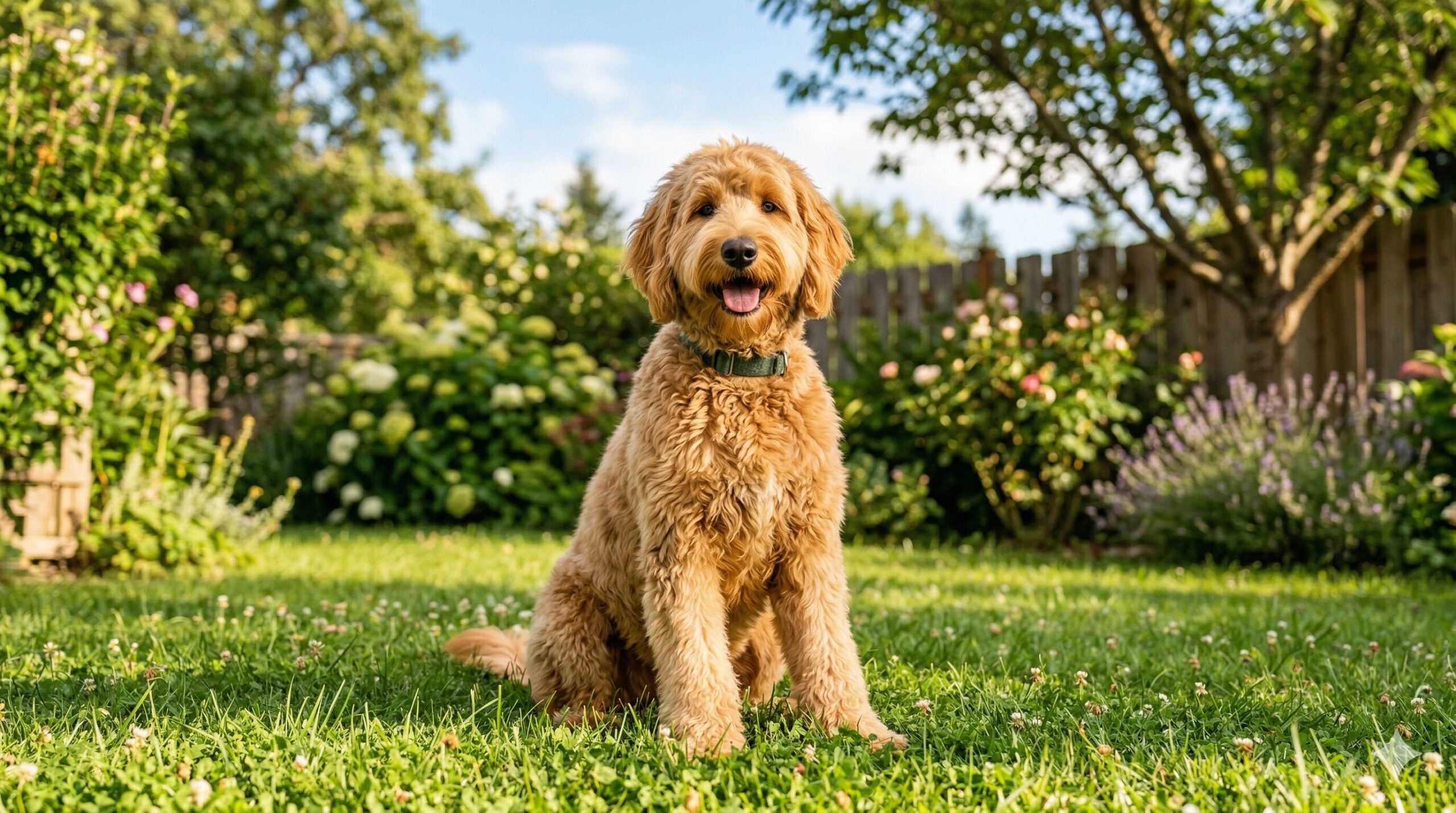
This goldendoodle care guide is the resource every new owner wishes they’d found before bringing their dog home — because this wildly popular hybrid comes with a learning curve most families don’t see coming. Goldendoodles are loving, intelligent, and endlessly charming, but their grooming demands, energy levels, and dietary needs are more involved than many people expect. Whether you’re already an owner or still deciding, this goldendoodle care guide covers everything you need to set your dog up for a healthy, happy life.
Goldendoodle Care Guide: Breed Background
Goldendoodles are a cross between a Golden Retriever and a Poodle, developed in the 1990s as a lower-shedding alternative to the Golden. They come in three sizes based on the Poodle parent:
- Standard Goldendoodle: 50–90 lbs, bred from a standard Poodle
- Medium Goldendoodle: 30–50 lbs, bred from a moyen or standard Poodle
- Mini Goldendoodle: 15–30 lbs, bred from a miniature Poodle
The American Kennel Club does not recognize Goldendoodles as a breed, but they consistently rank among the most searched hybrid dogs in the U.S. First-generation (F1) Goldendoodles are 50% Golden Retriever and 50% Poodle. F1b doodles are 75% Poodle, which typically produces a curlier, lower-shedding coat. Understanding your dog’s generation is important context for every section of this goldendoodle care guide — especially grooming.
The Three Coat Types and What They Mean for Grooming
The single most important variable in any goldendoodle care guide is coat type. Your doodle’s coat falls into one of three categories, each demanding a completely different grooming routine.
Straight Coat (Flat Coat)
Straight-coated Goldendoodles resemble the Golden Retriever side of their lineage. They shed more than their curly cousins and require the least intensive grooming: brushing 2–3 times per week with a slicker brush keeps the coat tangle-free. The Chris Christensen Big G Slicker Brush [Amazon] ($30–$40) is a professional-grade favorite that reaches through dense coats without scratching the skin.
Wavy Coat
The wavy coat is the most common type and sits in the middle of the grooming spectrum. These dogs shed moderately and need brushing 3–4 times per week to prevent mats from forming around the ears, armpits, and collar area. A detangling spray like BioSilk for Dogs Detangling Spray [Amazon] ($10–$15) makes sessions significantly easier — spray lightly on dry coat before brushing.
Curly Coat
Curly-coated Goldendoodles shed very little, making them popular with allergy-sensitive households. But they require the most grooming commitment of the three types. Without daily brushing, shed hairs become trapped inside tight curls, forming painful mats that pull on the skin. You’ll need both a slicker brush and a dematting comb like the GoPets Professional Dematting Comb [Amazon] ($20–$25). Work section by section from the ends toward the roots.
Professional Grooming
Every coat type benefits from professional grooming every 6–8 weeks. A full groom typically costs $75–$150 depending on size and location. A good goldendoodle care guide always emphasizes starting desensitization early — handle your puppy’s ears, paws, and face frequently so professional appointments aren’t traumatic.
We may earn a small commission when you purchase through our links, at no extra cost to you. We only recommend products we’ve researched and believe will genuinely help your dog.
Exercise Requirements
Goldendoodles inherit energy from both parent breeds — Golden Retrievers were bred for full days of fieldwork, and Poodles were active duck hunters. This goldendoodle care guide treats daily exercise as non-negotiable.
Daily minimums by size:
– Standard Goldendoodle: 60–90 minutes of active exercise
– Medium Goldendoodle: 45–60 minutes
– Mini Goldendoodle: 30–45 minutes
This should include off-leash time, fetch, swimming, or structured play — not just leashed walks. Under-exercised Goldendoodles become destructive and anxious. Mental stimulation matters equally: a 15-minute training session tires a Goldendoodle more effectively than a 30-minute walk.
Avoid over-exercising puppies under 12–18 months while growth plates are still developing. The rule of thumb: 5 minutes of exercise per month of age, twice daily.
Nutrition and Diet
Diet quality is a core part of this goldendoodle care guide because Goldendoodles can be prone to food sensitivities. Look for a high-quality dry kibble with real meat as the first ingredient, 22–28% protein for adults, and no corn syrup, artificial preservatives, or excessive fillers.
Feeding guidelines by size:
| Size | Puppy (daily) | Adult (daily) |
|---|---|---|
| Mini (15–30 lbs) | 1–1.5 cups | 1–2 cups |
| Medium (30–50 lbs) | 2–3 cups | 2–3 cups |
| Standard (50–90 lbs) | 3–4 cups | 3–4 cups |
Divide adult meals into two feedings. For Goldendoodles with sensitive skin or stomachs, Purina Pro Plan Sensitive Skin & Stomach [Amazon] ($65–$85 for 30 lbs) consistently performs well. Transition any new food gradually over 7–10 days to avoid digestive upset.
For breed-appropriate food recommendations, see our guide on the best dog food for golden retrievers, where many top picks translate well to Goldendoodles.
Common Health Issues
A complete goldendoodle care guide addresses health proactively. While hybrid vigor gives Goldendoodles some protection, they can still inherit conditions common to both parent breeds.
Hip and Elbow Dysplasia: A developmental joint abnormality leading to arthritis. Reputable breeders provide OFA clearances for breeding dogs.
Progressive Retinal Atrophy (PRA): An inherited eye condition causing gradual vision loss. Genetic testing identifies carriers — ask your breeder for clearances.
Ear Infections: Floppy, hair-filled ears trap moisture. Check weekly; clean every 2–4 weeks with a vet-approved ear cleaner.
Hypothyroidism: Underactive thyroid causes weight gain, lethargy, and a dull coat. Manageable with daily medication once diagnosed.
Bloat (GDV): Deep-chested standard Goldendoodles face elevated risk. Feed from ground-level bowls, avoid vigorous exercise within an hour of meals, and know the warning signs: unproductive retching, distended abdomen, restlessness.
Goldendoodle Temperament
No goldendoodle care guide is complete without an honest look at temperament. These dogs are highly social, people-oriented, and genuinely good-natured. They want to be near their family, get along well with children and other dogs, and approach strangers with warmth rather than wariness. That sociability makes them poor guard dogs but extraordinary family companions.
They are also among the most trainable dogs in existence. Positive reinforcement works exceptionally well — they pick up commands quickly and advance to complex tasks without difficulty. Emotionally sensitive by nature, they respond poorly to harsh corrections; frustration from you creates anxiety in them and derails training.
Their deep attachment to people can tip into separation anxiety if they’re left alone frequently. Crate training from puppyhood builds the independence they need to be comfortable alone.
If you’re still comparing breeds, our guide to the best dogs for first-time owners offers useful context.
Grooming Schedule at a Glance
| Task | Frequency |
|---|---|
| Brushing (straight coat) | 2–3x per week |
| Brushing (wavy coat) | 3–4x per week |
| Brushing (curly coat) | Daily |
| Ear cleaning | Every 2–4 weeks |
| Nail trimming | Every 3–4 weeks |
| Professional groom | Every 6–8 weeks |
| Dental brushing | 3–4x per week |
| Bath | Every 4–6 weeks |
Is a Goldendoodle Right for You?
The most honest advice in any goldendoodle care guide: these dogs are wonderful but not effortless. Budget $100–$200 per month beyond food and routine vet care for grooming alone. Between brushing, professional appointments, significant exercise requirements, and consistent training, they’re a real commitment. For the right owner — active, engaged, and willing to invest — a Goldendoodle is one of the most rewarding dogs you’ll ever own.
Frequently Asked Questions: Goldendoodle Care Guide
How often should a Goldendoodle be groomed professionally?
Every 6–8 weeks is the standard in any goldendoodle care guide. Curly-coated doodles may need appointments every 6 weeks; straight-coated dogs can stretch to 8–10 weeks with consistent home brushing.
Do Goldendoodles really not shed?
It depends on coat type. Curly-coated Goldendoodles (especially F1b and multigenerational) shed very little. Straight and wavy coats shed more — sometimes considerably. No Goldendoodle is 100% non-shedding, but most shed far less than a purebred Golden Retriever.
Are Goldendoodles good for people with allergies?
Many allergy sufferers tolerate Goldendoodles better than heavier-shedding breeds because less dander-coated fur circulates in the home. However, no dog is truly hypoallergenic — the allergen (Can f 1) is in saliva, urine, and dander. Spend time with the specific dog before committing if allergies are a concern.
How much exercise does a Goldendoodle puppy need?
Use the 5-minute rule: 5 minutes of exercise per month of age, twice daily. Avoid high-impact activities like jumping and long runs until growth plates close around 12–18 months.
What should I feed my Goldendoodle?
A high-quality dry kibble with real meat as the first ingredient is the foundation. Goldendoodles with sensitive skin often do better on salmon- or lamb-based formulas. Your vet can help narrow it down based on your individual dog.
How long do Goldendoodles live?
Goldendoodles typically live 10–15 years. Mini Goldendoodles tend toward the higher end; larger standards average 10–12 years. Regular vet care, appropriate nutrition, and a healthy weight all contribute significantly to longevity.