
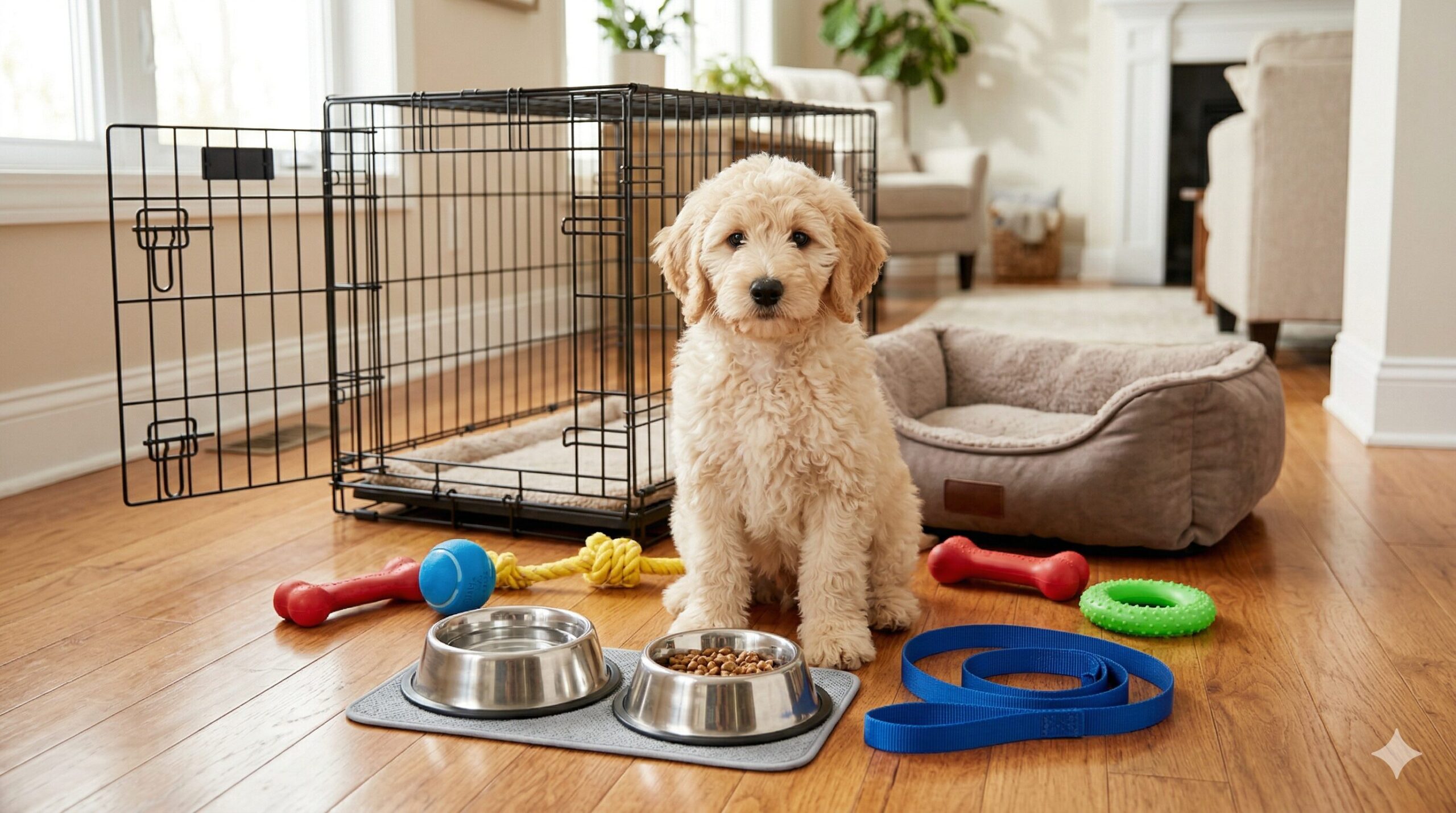
A solid new puppy checklist separates the things you genuinely need on day one from the things that can wait — or that you don’t need at all. Too many first-time owners spend $500 on adorable accessories and forget the enzymatic cleaner that saves their sanity when the accidents start. This new puppy checklist covers every category with specific product recommendations, approximate pricing, and honest advice about priorities. We’ve also included a total cost estimate so you can budget realistically.
Estimated first-year setup cost: $500–$1,200 depending on dog size and how many nice-to-haves you add.
We may earn a small commission when you purchase through our links, at no extra cost to you. We only recommend products we’ve researched and believe will genuinely help your dog.
New Puppy Checklist: Must-Haves Before Puppy Comes Home
Sleeping Setup
Crate — A crate is the foundation of any new puppy checklist. It’s essential for house training and safety. Buy a crate sized for your puppy’s adult dimensions and use the included divider panel to size it down for now. The MidWest iCrate [Amazon] ($65–$110) is the reliable default for most families. For size-specific guidance, see our full best dog crates for large dogs guide.
Crate mat or pad — A thin, washable mat is enough for puppies. Skip the expensive orthopedic bed until your dog is past the chewing phase. The MidWest Quiet Time Ombre Swirl [Amazon] ($20–$35) is inexpensive and machine washable.
Dog bed — For outside the crate, a simple fleece pad works for puppies. If you want something that lasts, the Furhaven Orthopedic Dog Bed [Amazon] ($35–$65) is durable and washable.
Feeding Supplies
Food and water bowls — Stainless steel is the right call: dishwasher safe, doesn’t harbor bacteria like plastic, and lasts indefinitely. The Frisco Stainless Steel Bowls [Amazon] ($15–$25 for a set) are simple and solid.
Puppy food — Start with whatever food your breeder or rescue has been feeding to avoid digestive upset. Your vet will guide long-term food selection. See our best dog food for golden retrievers for highly regarded options applicable to many large breeds.
Slow feeder or puzzle bowl — Not strictly essential, but puppies inhale food and fast eating causes GI issues. An inexpensive slow feeder insert ($10–$15) makes a real difference for gulpers.
Walking Gear
Collar with ID tag — Every new puppy checklist should list this first. A flat buckle collar with a metal ID tag engraved with your phone number is required from day one. The Blueberry Pet Classic Collar [Amazon] ($12–$18) paired with an Arca Pet stainless tag [Amazon] ($8–$12) is all you need.
4–6 foot leash — A standard nylon or leather leash for walks and training. The EzyDog Zero Shock Leash [Amazon] ($25–$35) has a built-in bungee that absorbs puppy lunges without yanking your shoulder.
Harness — A front-clip harness distributes leash pressure across the chest rather than the neck. The PetSafe Easy Walk Harness [Amazon] ($20–$30) is an excellent, affordable option that significantly reduces pulling.
Skip retractable leashes during training — they teach puppies to pull and are dangerous near traffic.
Training Tools
High-value treats — Small, soft training treats are the foundation of positive reinforcement. The Zuke’s Mini Naturals [Amazon] ($10–$15) are pea-sized, soft, and loved by virtually every dog.
Treat pouch — A PetSafe Treat Pouch [Amazon] ($15–$20) keeps rewards accessible without fumbling in your pocket.
Clicker — A StarMark Clicker [Amazon] ($5–$8) paired with treats is a powerful training tool for marking correct behavior. Not required, but effective and nearly free.
15–20 foot training lead — Essential for teaching recall safely before off-leash trust is established. A simple nylon long line ($15–$25) is sufficient.
Grooming Basics
Slicker brush — Every puppy on your new puppy checklist needs a brush from day one. The Chris Christensen Baby G Slicker Brush [Amazon] ($20–$30) works well for most breeds.
Nail clippers — Handle your puppy’s paws from week one. The Safari Professional Nail Trimmer [Amazon] ($12–$18) is easy to use. Ask your vet to demonstrate the correct angle at the first visit.
Dog shampoo — A gentle tearless puppy shampoo. Burt’s Bees Hypoallergenic Shampoo [Amazon] ($8–$12) is gentle enough for sensitive puppy skin.
Dog toothbrush and toothpaste — No new puppy checklist is complete without dental care. Start brushing immediately. The Virbac CET Starter Kit [Amazon] ($10–$15) includes brushes and enzymatic toothpaste.
Cleaning Supplies
Enzymatic cleaner — The single most important cleaning product on any new puppy checklist. Enzymatic cleaners break down the proteins in urine and feces that regular cleaners miss. Skipping this means dogs re-soil the same spots repeatedly. Nature’s Miracle Original [Amazon] ($15–$20) or Rocco & Roxie Professional Strength [Amazon] ($20–$25) are the go-to options.
Baby gates or exercise pen — Puppies need a confined space until house trained. A Regalo Easy Step Walk-Through Gate [Amazon] ($25–$40) works for doorways. An Iris USA Exercise Pen [Amazon] ($40–$70) creates a larger puppy zone.
Paper towels — in bulk. You know why.
Safety Items
Microchip — If your puppy doesn’t come microchipped, schedule it at the first vet visit. $25–$50 and the single best chance of recovering a lost dog.
Dog-safe household cleaners — Many common products are toxic to dogs: certain essential oils, bleach residue, many floor cleaners. Switch to dog-safe alternatives or keep puppies off freshly cleaned floors until dry.
New Puppy Checklist: Nice-to-Haves
Puppy playpen — A larger temporary safe space without full house access. Helpful but not essential if you have baby gates.
Snuffle mat — Mental enrichment through nose work. The Paw5 Snuffle Mat [Amazon] ($25–$35) is durable and popular.
KONG Classic — A stuffable rubber chew toy that’s been a new puppy checklist staple for decades. Fill with peanut butter, freeze, and give when you need 20 minutes of peace. The KONG Classic [Amazon] ($12–$20) in the breed-appropriate size is a smart buy.
Chew toys variety pack — Puppies teethe between 3–6 months. Provide Nylabones, bully sticks, and rubber toys. Rotate regularly to maintain interest.
Dog camera — A basic indoor camera lets you monitor crate training sessions. The Furbo Dog Camera [Amazon] ($150–$200) has a treat dispenser as a bonus.
Car restraint or seatbelt — An unrestrained dog is a dangerous projectile in a sudden stop. A Kurgo Seat Belt Tether [Amazon] ($15–$20) clips to the harness and car seat belt receiver.
Poop bags — Technically a must-have but too basic to put first on the list. The Earth Rated Poop Bag Dispenser [Amazon] ($10–$15) with a 300-count refill is the right move.
Total Estimated Setup Costs
| Category | Estimated Cost |
|---|---|
| Sleeping setup (crate + bed) | $85–$145 |
| Feeding supplies | $30–$50 |
| Walking gear | $55–$85 |
| Training tools | $35–$60 |
| Grooming basics | $55–$80 |
| Cleaning supplies | $60–$110 |
| Safety items | $25–$50 |
| Must-haves total | $345–$580 |
| Nice-to-haves (if adding several) | $100–$300 |
| First-month vet visit + vaccines | $150–$300 |
| Estimated total first month | $595–$1,180 |
Ongoing monthly costs — food, treats, toys, flea prevention — run $75–$200/month depending on dog size.
What New Puppy Owners Always Wish They’d Known
Buy more enzymatic cleaner than you think you need. Seriously. House training takes weeks to months and running out mid-cleanup is a real problem.
Start handling exercises from day one. Daily touch your puppy’s paws, ears, mouth, and tail. This makes vet visits and grooming exponentially easier for their entire life.
Socialization matters more than obedience at first. Between 8–16 weeks, positive exposure to new people, animals, places, sounds, and surfaces is the highest-value investment you can make. A well-socialized dog is easier to train, less fearful, and happier for life.
For breed-specific expectations, check our guide to the best dogs for first-time owners.
Frequently Asked Questions: New Puppy Checklist
What do I absolutely need before bringing a puppy home?
The true non-negotiables on any new puppy checklist: a crate, collar with ID tag, food and water bowls, puppy food, a 6-foot leash, and enzymatic cleaner. Everything else can be sourced in the first week if needed. Don’t delay puppy pickup over missing accessories.
How much does it cost to set up for a new puppy?
Budget $350–$600 for basic supplies before bringing a puppy home. Add $150–$300 for the first vet visit, vaccines, and microchip. Then plan $75–$200 per month in ongoing costs. Pet insurance typically runs $30–$60/month for puppies and is worth considering for unexpected vet bills.
What size crate should I get for my puppy?
Buy a crate sized for your dog’s adult dimensions, not their current puppy size. Use the included divider panel to block off extra space during house training — too much room lets puppies use one end as a bathroom.
What food should I feed my new puppy?
Start with whatever food your breeder or rescue has been feeding. Transition to a new food gradually (7–10 days) to avoid digestive upset. Look for AAFCO-approved formulas for puppies or “all life stages.” Large-breed puppies need large-breed-specific formulas — calcium-phosphorus ratios matter for proper bone development.
When should I take my puppy to the vet?
Within 48–72 hours of bringing them home, ideally. Many breeders and rescues require this. Your vet will evaluate overall health, start a vaccine series, test for parasites, and discuss spay/neuter timing.
How do I stop my puppy from chewing everything?
You redirect, not stop. Chewing is developmental and diminishes naturally. Provide abundant appropriate chew toys, keep valuable items out of reach, supervise actively, and redirect immediately when you catch inappropriate chewing. Enzymatic deterrent sprays like Bitter Apple [Amazon] ($10–$15) help protect specific items.